
On this page
- What Is the Difference Between a Monoplace and a Multiplace Hyperbaric Chamber?
- How Does Pressure-Vessel Engineering Differ Between Configurations?
- Monoplace vs. Multiplace Hyperbaric Chambers: Configuration Comparison
- Which Configuration Fits a Clinic vs. a Hospital?
- How Do Operating Procedures Differ Between Configurations?
- How Do the Costs of Monoplace and Multiplace Chambers Compare?
- What Makes HPO TECH Uniquely Positioned to Compare Both Configurations?
- Frequently Asked Questions
- Choosing the Right Configuration
A monoplace hyperbaric chamber holds exactly one person and pressurises the entire vessel with oxygen. A multiplace hyperbaric chamber holds two or more occupants, including a medical attendant, and delivers oxygen through individual masks. That single engineering distinction drives every difference in vessel design, staffing model, footprint, and total cost of ownership.
Clinics, hospitals, and specialist operators evaluating hyperbaric equipment face this configuration decision early in the procurement process. The right choice depends on throughput requirements, available floor space, staffing capacity, and capital budget. This guide compares both configurations from an engineering standpoint, drawing on the direct fabrication experience of a manufacturer that builds both types.
Key takeaways
- Monoplace chambers serve one occupant; multiplace hyperbaric chambers serve two or more, with an attendant inside the vessel.
- NFPA 99:2024 formally classifies these as Class B (monoplace) and Class A (multiplace) hyperbaric systems.
- Multiplace configurations require a built-in breathing system (BIBS), a dedicated life support system, and considerably more floor space.
- Monoplace units suit private clinics and individual-use settings; multiplace suits hospitals and high-throughput facilities.
- Both types must comply with ASME PVHO-1 (US) or EN 14931:2006 (Europe) pressure vessel standards.
What Is the Difference Between a Monoplace and a Multiplace Hyperbaric Chamber?
The core difference is occupancy. According to NFPA 99:2024, Chapter 14, a Class B chamber accommodates a single occupant and a Class A chamber accommodates two or more persons, including an inside attendant. (NFPA, 2024). That occupancy difference defines everything else: vessel diameter, oxygen delivery method, life support complexity, and staffing requirements.
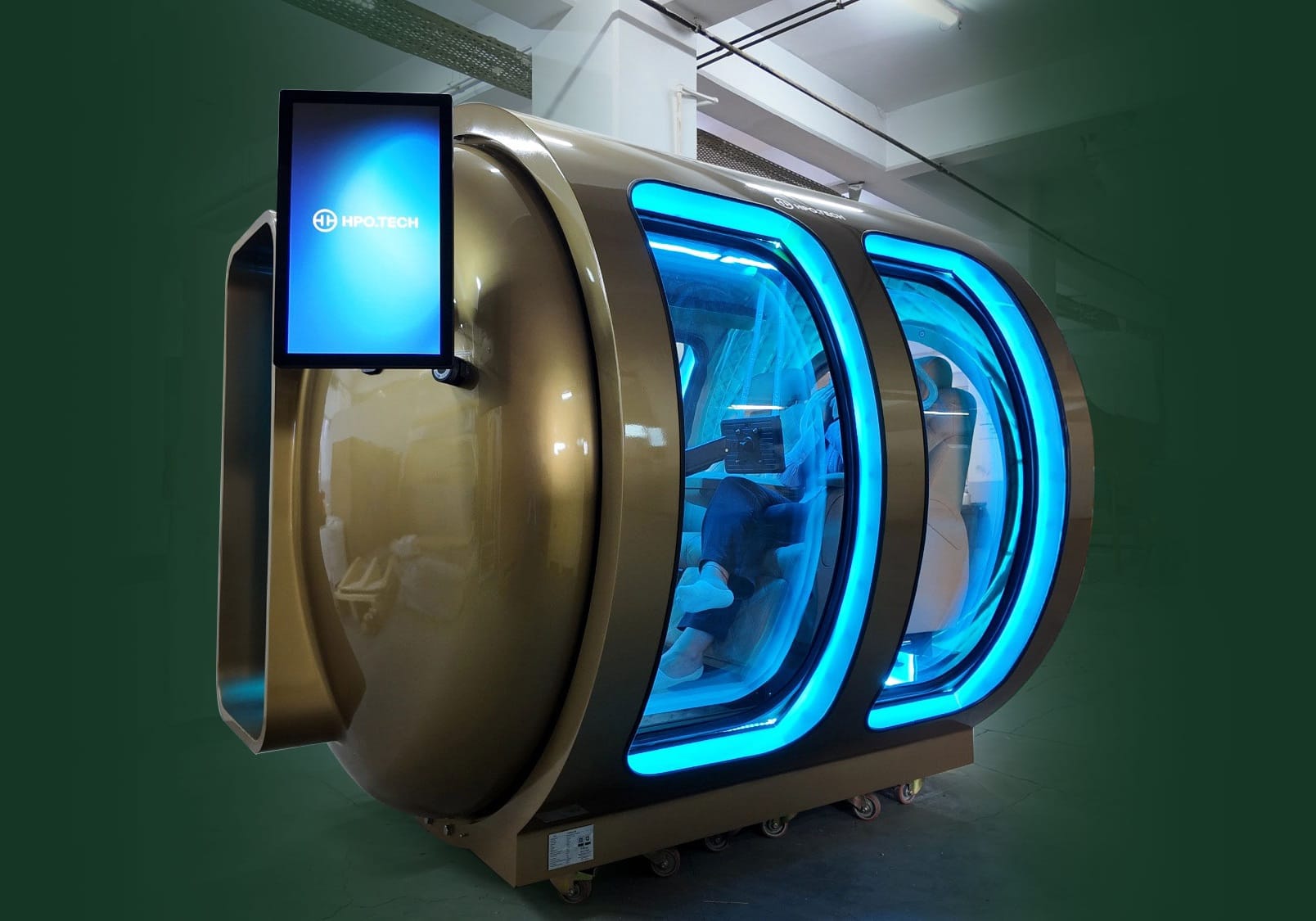
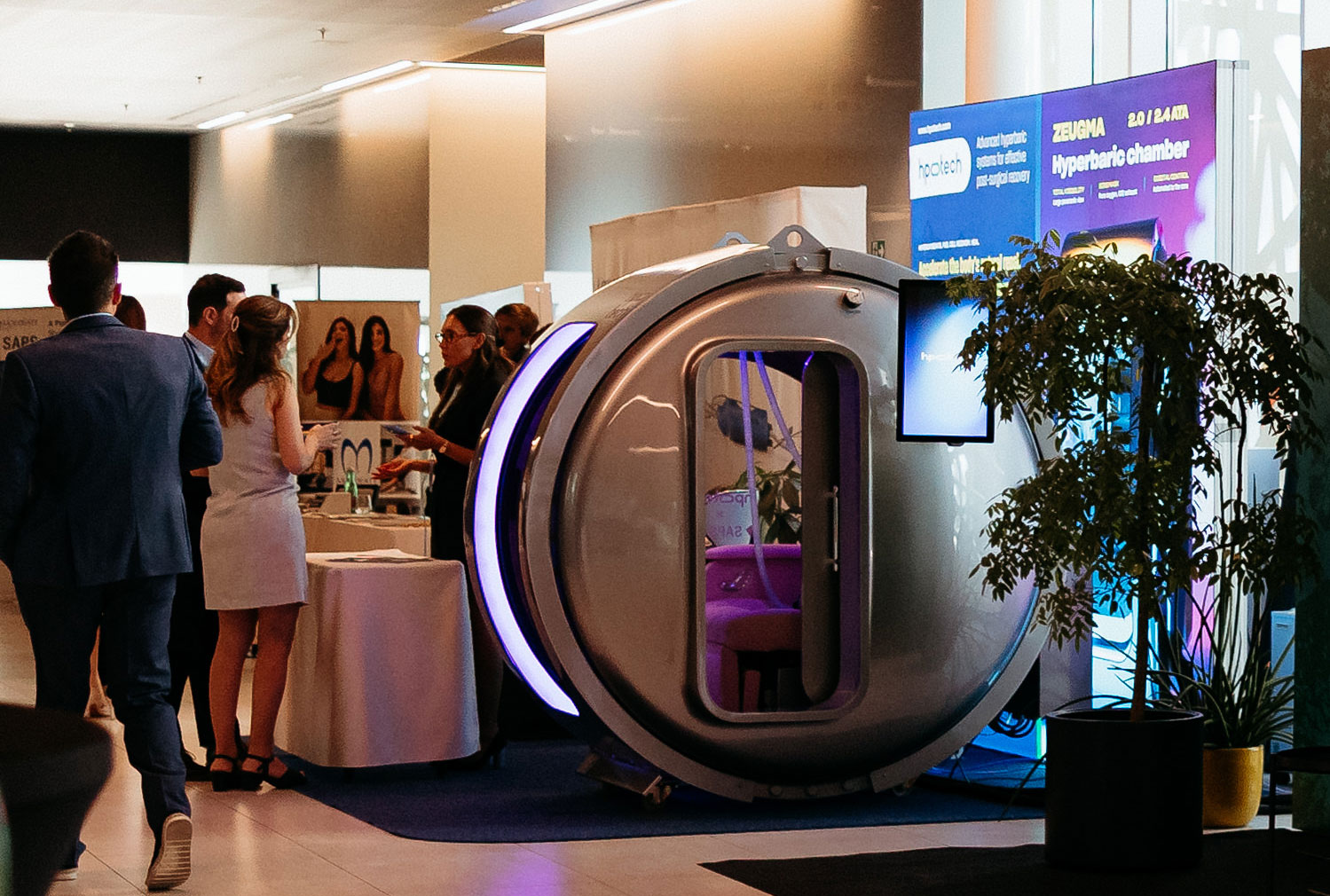
Monoplace chambers pressurise the entire inner volume with oxygen. The occupant breathes the ambient atmosphere inside the vessel. This design is mechanically simpler and more compact, which makes it well-suited to private clinics, sports facilities, and individual installations with limited floor space.
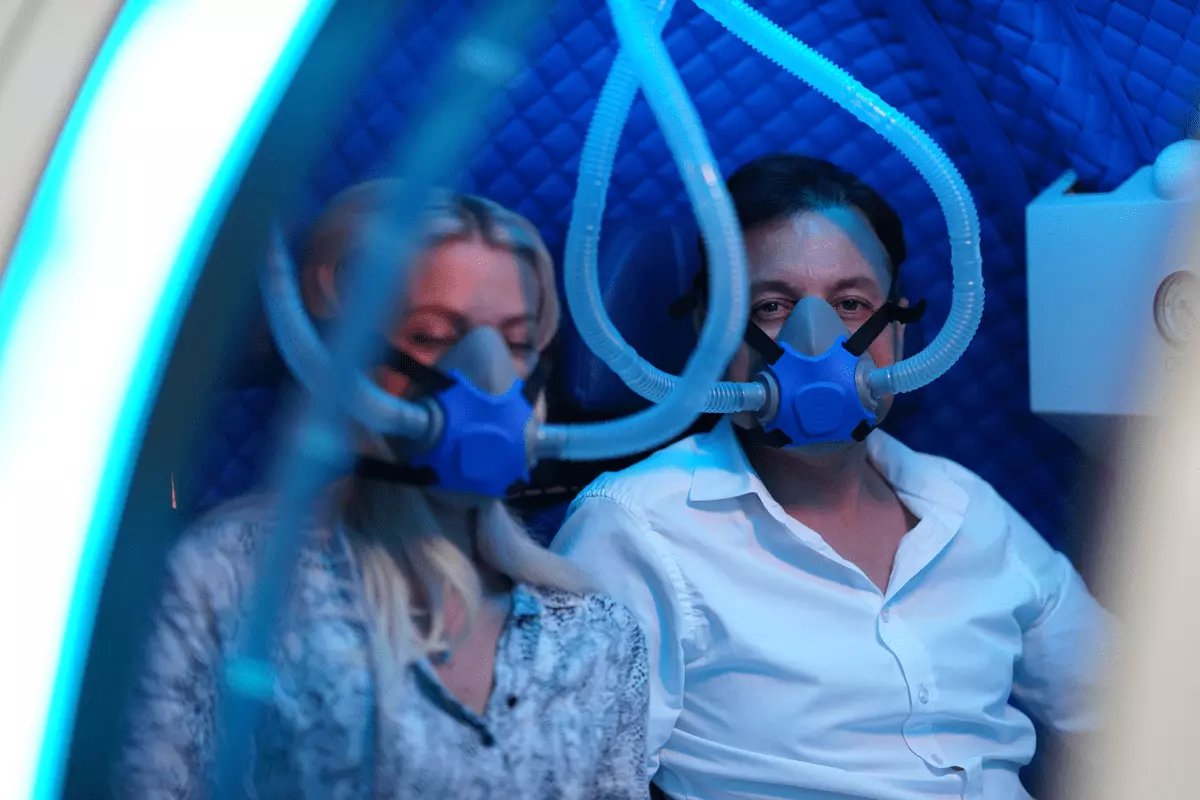
Multiplace hyperbaric chambers pressurise the vessel with compressed air, not oxygen. Each occupant breathes high-concentration oxygen through an individual mask or a BIBS (Built-In Breathing System) circuit. An inside attendant can monitor occupants, adjust equipment, and respond to any in-chamber situation directly. This is a key operational advantage for settings that require close monitoring during sessions.
How Does Pressure-Vessel Engineering Differ Between Configurations?
Both chamber types must meet the same governing standards, but the engineering solutions differ significantly. ASME PVHO-1, first published in 1977 and maintained by the American Society of Mechanical Engineers, is mandatory for US human-occupancy pressure vessels. (ASME, 2022). EN 14931:2006 governs the European market. Both standards address vessel integrity, viewport design, entry systems, and emergency procedures.
Vessel Geometry and Structural Design
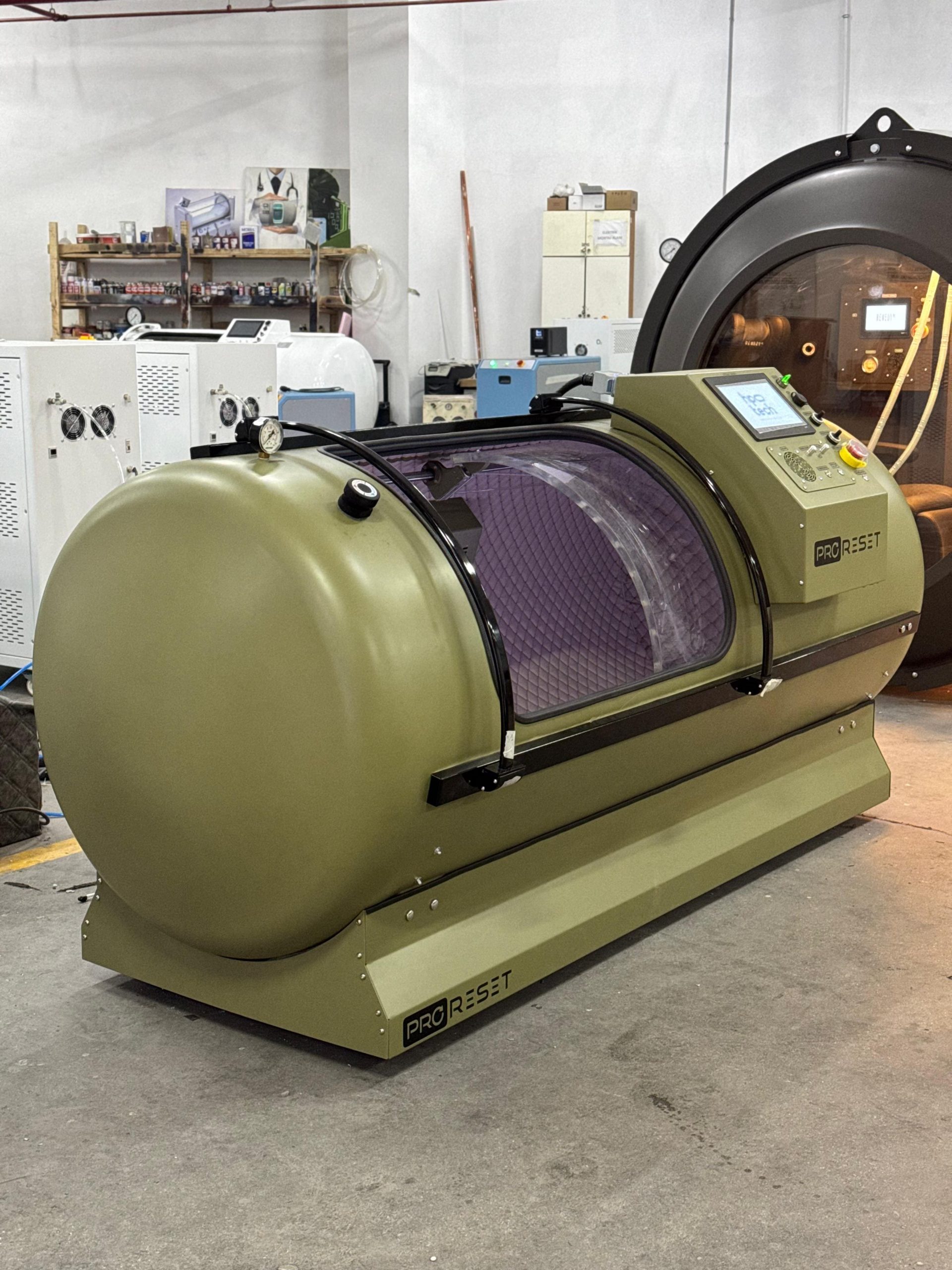
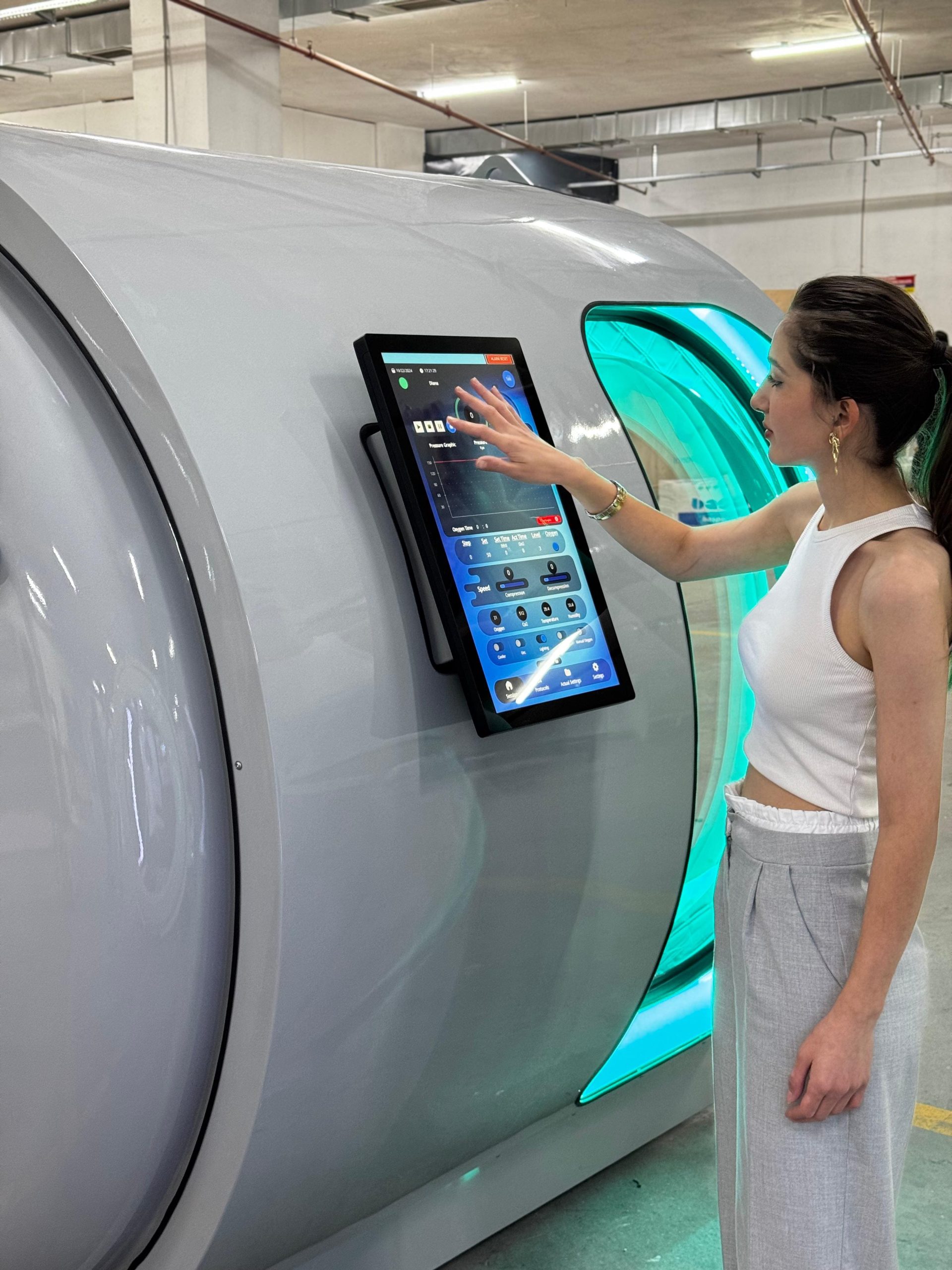
Monoplace chambers are almost universally cylindrical, with an acrylic or steel shell and a sliding or hinged entry door at one end. The single-person form factor allows a compact diameter, typically under one metre, which keeps material costs and manufacturing complexity lower than multiplace equivalents at the same pressure rating.
Multiplace hyperbaric chambers are larger and structurally more complex. Vessels sized for two to twelve or more occupants require wider diameters or rectangular cross-sections to allow seating, movement, and attendant access inside. Wall thickness increases with vessel diameter to maintain the same pressure rating, which adds raw material weight and fabrication time considerably.
From the fabrication floor, the jump in engineering complexity from monoplace to multiplace is not linear. A multiplace vessel for eight occupants involves multiple viewports, a dedicated lock-on entry system, penetrations for BIBS gas lines, CO2 scrubber mounts, and intercommunication fittings. Each penetration is a potential leak path that requires independent engineering review under ASME PVHO-1 or EN 14931:2006.
Oxygen Delivery Systems
The oxygen delivery architecture is the sharpest engineering dividing line between configurations. Monoplace chambers flood the vessel with oxygen, achieving near-100% O2 concentration in the breathing atmosphere. This eliminates the need for individual delivery hardware but creates a strict fire-risk environment requiring controlled materials and clothing protocols for every session.
Multiplace chambers use a BIBS circuit to deliver oxygen selectively to each occupant. The BIBS typically achieves oxygen concentrations exceeding 95% at the mask, while the chamber atmosphere itself remains air-based. This separation of breathing gas from ambient atmosphere reduces fire risk inside the vessel and allows attendants to work safely throughout a session without a personal oxygen supply.
Monoplace vs. Multiplace Hyperbaric Chambers: Configuration Comparison
The table below distils the primary engineering differences between monoplace and multiplace configurations across nine criteria. Both types operate within the 2.0 to 3.0 ATA clinical pressure range established in Undersea and Hyperbaric Medical Society engineering guidelines. (UHMS, 2023). Use this as a planning reference, not a final specification.
| Feature | Monoplace | Multiplace |
|---|---|---|
| Occupancy | 1 person | 2 to 12+ persons |
| NFPA 99 Classification | Class B | Class A |
| Oxygen delivery | Full-chamber flood (100% O2 atmosphere) | Individual BIBS mask or hood circuit |
| Attendant access | None (external monitoring only) | Inside attendant present throughout |
| Typical footprint | Compact: 2-4 m² per unit | Larger: 10-60 m² depending on capacity |
| Pressure range (clinical) | 2.0-3.0 ATA | 2.0-3.0 ATA |
| Life support system | Not required (simple gas panel) | Required: LSS for O2, air, CO2 scrubbing |
| Typical use setting | Private clinic, sports facility, home use | Hospital, specialist centre, military, research |
| Capital cost tier | Entry to mid-range | Mid-range to premium |
Which Configuration Fits a Clinic vs. a Hospital?
The configuration decision comes down to session volume, staffing capacity, and room availability. Multiplace hyperbaric chambers are the preferred choice for hospitals and high-throughput specialist centres: a single vessel runs multiple occupants simultaneously, reducing cost-per-session at scale. (UHMS, 2023). Monoplace units suit lower-volume settings with limited floor space.
Private clinics and wellness facilities frequently choose monoplace configurations. Installation is faster, the room footprint is smaller, and the unit does not require an inside attendant. A single trained operator can oversee multiple monoplace units running in parallel, which keeps staffing overhead manageable for smaller operations.
Hospitals and specialist hyperbaric centres typically specify multiplace hyperbaric chambers for several reasons. An inside attendant can monitor occupants directly, manage any in-chamber situation, and assist occupants who need help with equipment. Multiplace vessels also allow simultaneous multi-occupant sessions, which is operationally efficient for high-referral environments where throughput determines viability.
Facilities that begin with a single monoplace unit and later expand often reach a crossover point at around four to six simultaneous sessions per day where a multiplace configuration becomes operationally more efficient, even with the higher initial capital outlay. Operators planning for growth should model both scenarios before committing, because retrofitting a room for a multiplace vessel after initial installation is rarely straightforward or cost-neutral.
How Do Operating Procedures Differ Between Configurations?
The operational differences go well beyond chamber size. The entire procedural framework, from pre-session checks to emergency response, differs between configurations. NFPA 99:2024 sets distinct facility requirements for Class A and Class B systems, including emergency procedures, electrical classifications, and staffing roles. (NFPA, 2024).
Staffing and Attendant Access
Monoplace chambers require no inside attendant. One trained operator manages pressurisation, monitors the occupant through the viewport or camera system, and controls gas supply from an external panel. This reduces staffing requirements significantly but limits the ability to intervene inside the vessel during a session.
Multiplace hyperbaric chambers require at least one inside attendant for every session. The attendant enters the chamber with the occupants, remains present for the full session duration, and responds to any in-chamber situation. This role requires specific training and regular recertification under applicable operational standards, which adds a recurring HR and scheduling cost to facility operations.
Life Support and Gas Management
Monoplace gas management involves a relatively simple oxygen supply panel: fill, pressurise, and vent. Life support demands are low because oxygen serves as both the breathing gas and the pressurising medium for a single occupant.
Multiplace facilities require a dedicated life support system (LSS) to manage separate oxygen and air supplies, regulate flow to each BIBS circuit, monitor CO2 levels, and operate CO2 scrubbing continuously throughout the session. The LSS represents a significant portion of total installed system cost and requires scheduled maintenance and certification independent of the vessel itself.
How Do the Costs of Monoplace and Multiplace Chambers Compare?
Cost comparison must account for capital expenditure, installation, staffing, and ongoing maintenance: no two facilities have identical profiles. ISO 13485:2016, the international quality management standard for medical device manufacturers, affects long-term reliability and serviceability across both configurations. (ISO, 2016). The tiers below are qualitative guidance, not fixed prices.
Capital Expenditure
Monoplace chambers sit in the entry to mid-range capital tier. Simpler vessel geometry, smaller footprint, and the absence of a BIBS circuit and LSS keep unit costs substantially lower than multiplace systems at equivalent pressure ratings. Installation requirements are also lighter: standard room power, an oxygen supply connection, and basic ventilation.
Multiplace hyperbaric chambers carry a higher capital cost that scales directly with occupant capacity. A two-seat multiplace unit is a moderate step above a monoplace in capital cost. A twelve-seat clinical installation is a major capital project: the vessel, LSS, electrical fit-out, BIBS infrastructure, and ancillary equipment all contribute to total installed cost, and civil works to prepare the room add further.
Operating Costs
Monoplace operating costs are dominated by oxygen consumption, because the entire vessel fills with oxygen for each session. Multiplace chambers consume less oxygen per session (only the BIBS circuits are oxygen-fed) but add the cost of compressed air, CO2 absorbent media, and inside attendant time per session. At high session volumes, the multiplace model typically produces a lower cost per session than running multiple parallel monoplace units.
What Makes HPO TECH Uniquely Positioned to Compare Both Configurations?
Most hyperbaric manufacturers specialise in one configuration. HPO TECH designs and fabricates both types at its Istanbul facility, with hard-shell vessels independently tested by Türk Loydu, Turkey’s national classification society established in 1962. (Türk Loydu, 1962). This dual-type manufacturing base provides direct comparative insight from the fabrication floor, not from secondary literature.
In building both types on the same production floor, HPO TECH’s engineering team has found that the design decision with the largest downstream impact on total cost of ownership is consistently the oxygen delivery architecture: full-chamber flood for monoplace vs. BIBS circuit for multiplace. Facilities that underspecify the BIBS system to reduce initial cost often encounter remediation expenditure within the first few years of operation.
The monoplace range, including the Zeugma and Petra models, is designed for private clinics, sports facilities, and individual operators needing a compact, reliable hard-shell chamber. The multiplace range, including the Atlantis, Mediterranean, Titan, and Giza models, serves hospitals, specialist hyperbaric centres, and military or research facilities requiring attendant access and multi-occupant capacity.
Frequently Asked Questions
Can a monoplace chamber be converted to multiplace use?
No. A monoplace chamber is engineered as a single-occupant pressure vessel with a fixed internal diameter, a single-person entry system, and an oxygen-atmosphere design. Converting it to multiplace use would require a fundamentally different vessel, a BIBS circuit, and a full life support system. Operators planning to scale to multi-occupant sessions should specify a multiplace hyperbaric chamber from the outset. (ASME PVHO-1, 2022).
Which configuration requires less floor space?
Monoplace chambers require significantly less floor space. A single unit typically occupies two to four square metres, making it practical for a standard clinic room. A multiplace hyperbaric chamber for six or more occupants can require ten to sixty square metres of dedicated floor area, plus additional space for the life support system, gas storage cylinders, and the operator station.
Do both types operate at the same pressure?
Both configurations typically operate in the 2.0 to 3.0 ATA range for clinical protocols, as established in Undersea and Hyperbaric Medical Society engineering guidelines. (UHMS, 2023). Specific operating pressures depend on the vessel’s certified rating and the operational protocol. Hard-shell chambers for both configurations are pressure-tested and certified by Türk Loydu before delivery.
Which configuration carries higher fire risk inside the vessel?
Monoplace chambers carry a higher inherent fire risk inside the vessel because the chamber atmosphere is near-100% oxygen. This requires strict protocols on materials, clothing, and any items brought inside. Multiplace hyperbaric chambers use a compressed-air atmosphere, which substantially reduces ignition risk inside the vessel. The BIBS oxygen supply lines and mask seals are the primary fire-management focus in multiplace systems. (NFPA 99:2024, Chapter 14).
How does Türk Loydu testing relate to CE marking or MDR certification?
Türk Loydu is a classification society, not a regulatory body. It performs independent structural and engineering testing of the pressure vessel: weld quality, material certification, and pressure testing to design specifications. CE marking demonstrates conformity with European Directives. The EU Medical Devices Regulation (MDR 2017/745) governs the certification of medical devices for clinical use. HPO TECH vessels carry all three layers because each covers a distinct aspect of compliance. (ISO 13485:2016; Türk Loydu, 1962).
Choosing the Right Configuration
The monoplace vs. multiplace decision is fundamentally an engineering and operations question. Single-occupant installations with lower throughput requirements point clearly to a monoplace configuration. High-volume facilities, hospital settings, and operations requiring an inside attendant point to multiplace hyperbaric chambers. Total cost of ownership, not just the purchase price, should anchor the decision from the start.
Building both configurations from the same Istanbul facility means the engineering team can assess room layout, gas supply infrastructure, and vessel specification for either type without bias toward a single product line. The comparison in this guide reflects that dual-manufacturing vantage.
Explore the monoplace chamber range or the multiplace chamber range, or request a configuration-specific quote.