
On this page
- What Is a Hyperbaric Chamber?
- How Does a Hyperbaric Chamber Raise Pressure?
- What Is Henry's Law and Why Does It Matter for Chamber Design?
- What Happens During Compression and Decompression?
- What Are the Main Components of a Hyperbaric Chamber?
- What Pressure Ratings Do Chambers Operate At?
- How Are Safety Systems Engineered Into the Chamber?
- What Standards Govern Hyperbaric Chamber Manufacturing?
- Frequently Asked Questions
- Engineering Confidence, From Physics to Production
A hyperbaric chamber is a sealed pressure vessel engineered to raise and hold internal atmospheric pressure above ambient levels. At sea level, ambient pressure sits at exactly 1 ATA (101.325 kPa), the standard defined by the International Bureau of Weights and Measures (BIPM, 2019). The chamber’s pressure-control system lifts that baseline to a precise set-point, sustains it for a defined period, and returns to ambient at a controlled rate.
Key takeaways
- A hyperbaric chamber is a sealed, hard-shell pressure vessel that elevates internal pressure above sea-level baseline (1 ATA / 101.325 kPa).
- Compression and decompression follow precise ramp profiles controlled by automated valves and regulators.
- Henry’s Law (1803) describes gas dissolution in liquids as a function of pressure, a core physics principle that shapes seal and material engineering decisions.
- Commercial chambers are certified under ASME PVHO-1, ISO 13485:2016, FDA 510(k), or CE marking under EU MDR 2017/745, depending on the target market.
What Is a Hyperbaric Chamber?
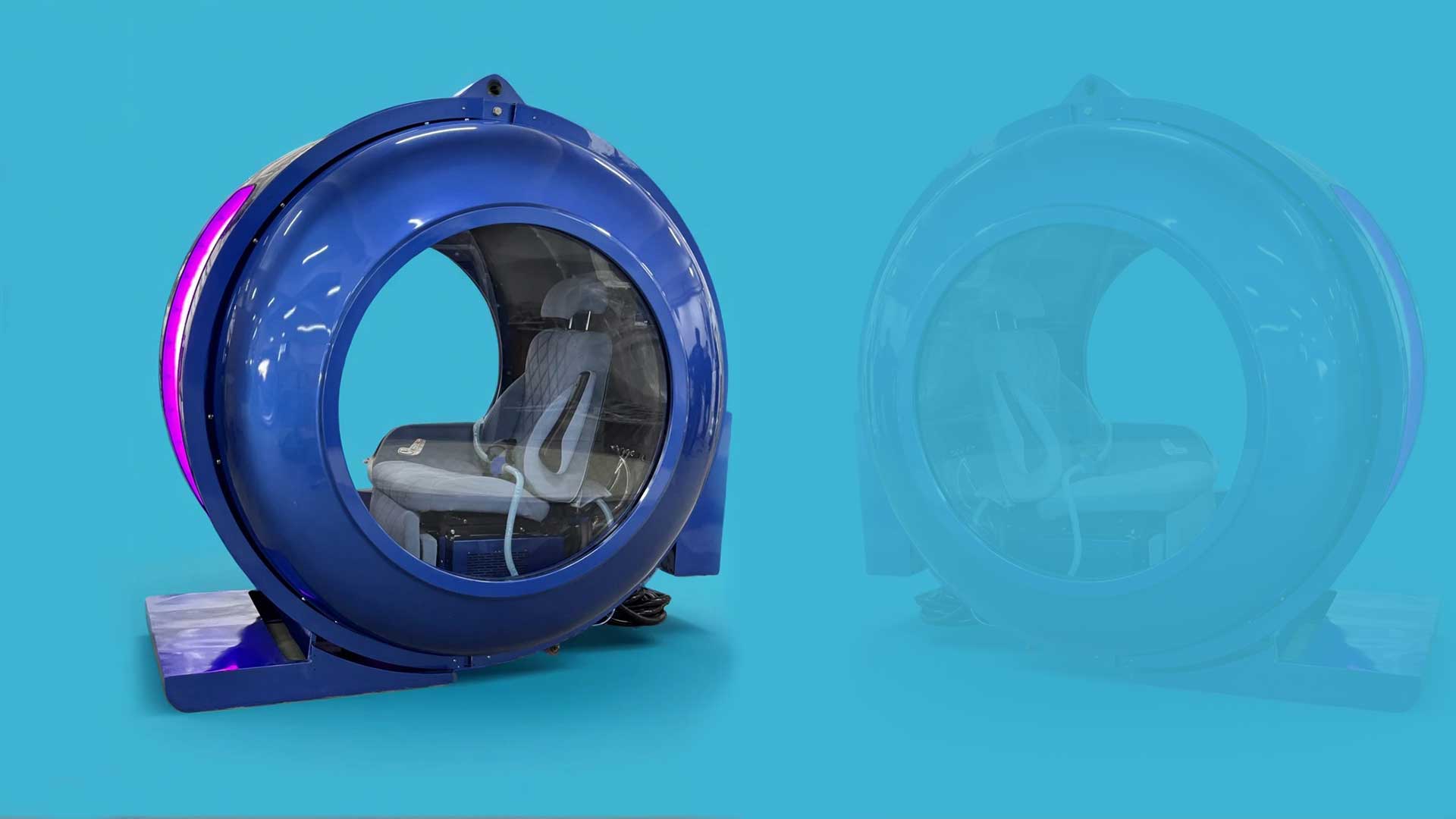
A hyperbaric chamber is a pressure vessel designed to house one or more people at controlled, elevated atmospheric pressure. The term “hyperbaric” comes from the Greek hyper (above) and baros (weight or pressure). Two primary formats exist: monoplace chambers for a single occupant and multiplace chambers for two or more people, sometimes with an attendant operator stationed inside the vessel. Clinical-class chambers typically operate between 2.0 and 3.0 ATA, a range established in ASME PVHO-1 (ASME, 2019 edition).
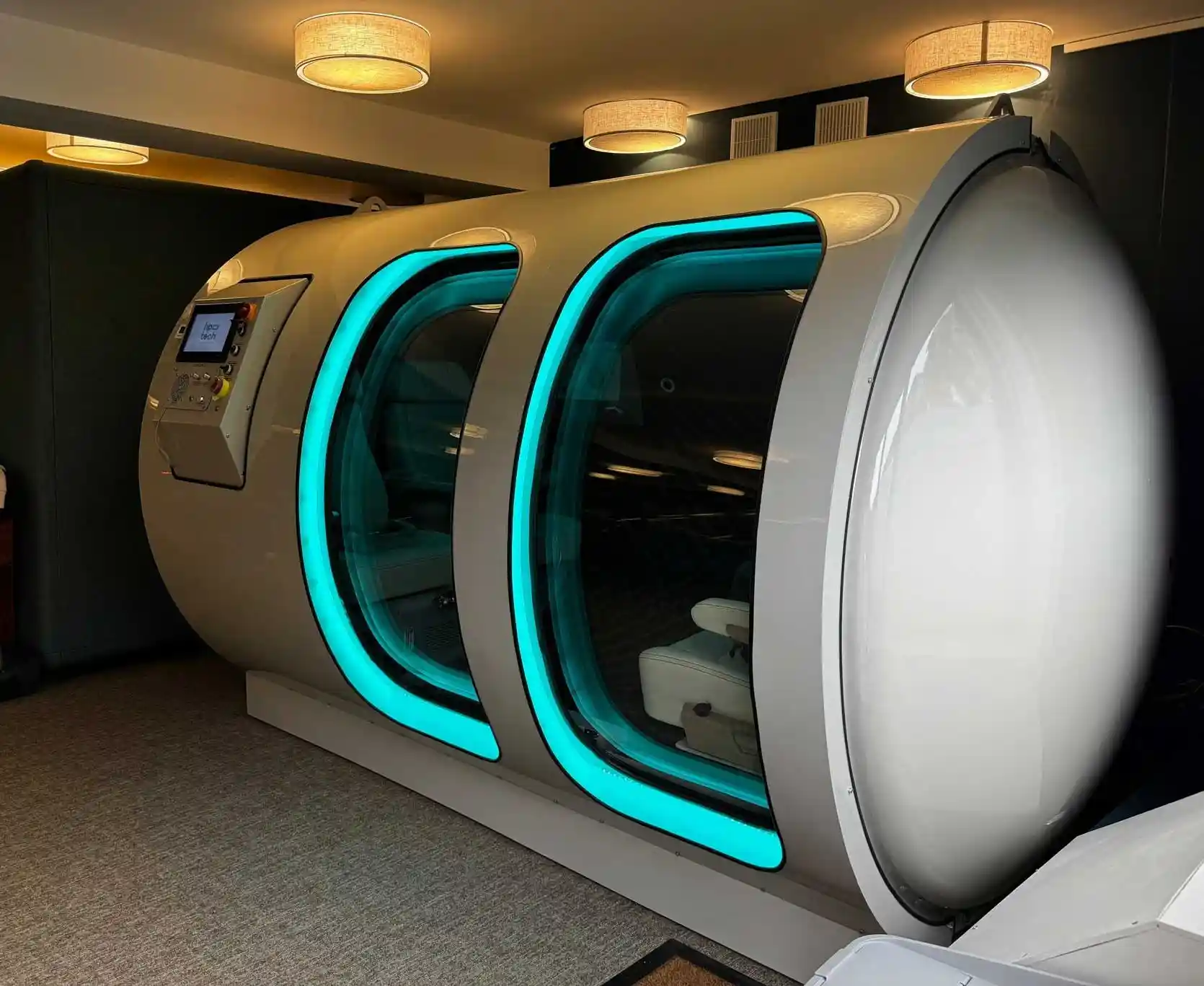
Hard-shell monoplace units are fabricated from high-grade steel or aluminium alloy. Multiplace chambers are larger structures built for group occupancy. The essential engineering criteria for any hyperbaric chamber are structural integrity at the maximum allowable working pressure (MAWP), airtight repeatable sealing at every penetration, reliable gas delivery and exhaust control, and viewport safety rated well beyond the working pressure.
Monoplace vs. Multiplace Configurations
Monoplace chambers compress the entire internal atmosphere, typically with 100% oxygen or oxygen-enriched air fed from an external supply. Multiplace chambers pressurize with compressed air, and occupants breathe gas through an over-the-head mask or demand hood. Each configuration requires different gas-delivery engineering and fire-suppression design, but the core pressure-vessel physics are identical across both types.
How Does a Hyperbaric Chamber Raise Pressure?
The chamber raises internal pressure by pumping gas into a sealed, rigid shell at a rate that exceeds any exhaust. The pressure-control system modulates inlet flow through electronically controlled or manually operated valves, targeting a set-point expressed in ATA (atmospheres absolute) or bar. Robert Boyle described the governing relationship in 1662: at constant temperature, pressure and volume are inversely proportional (Boyle, 1662). Since the shell volume is fixed, pressure rises in direct proportion to the mass of gas added.
Compression Ramps
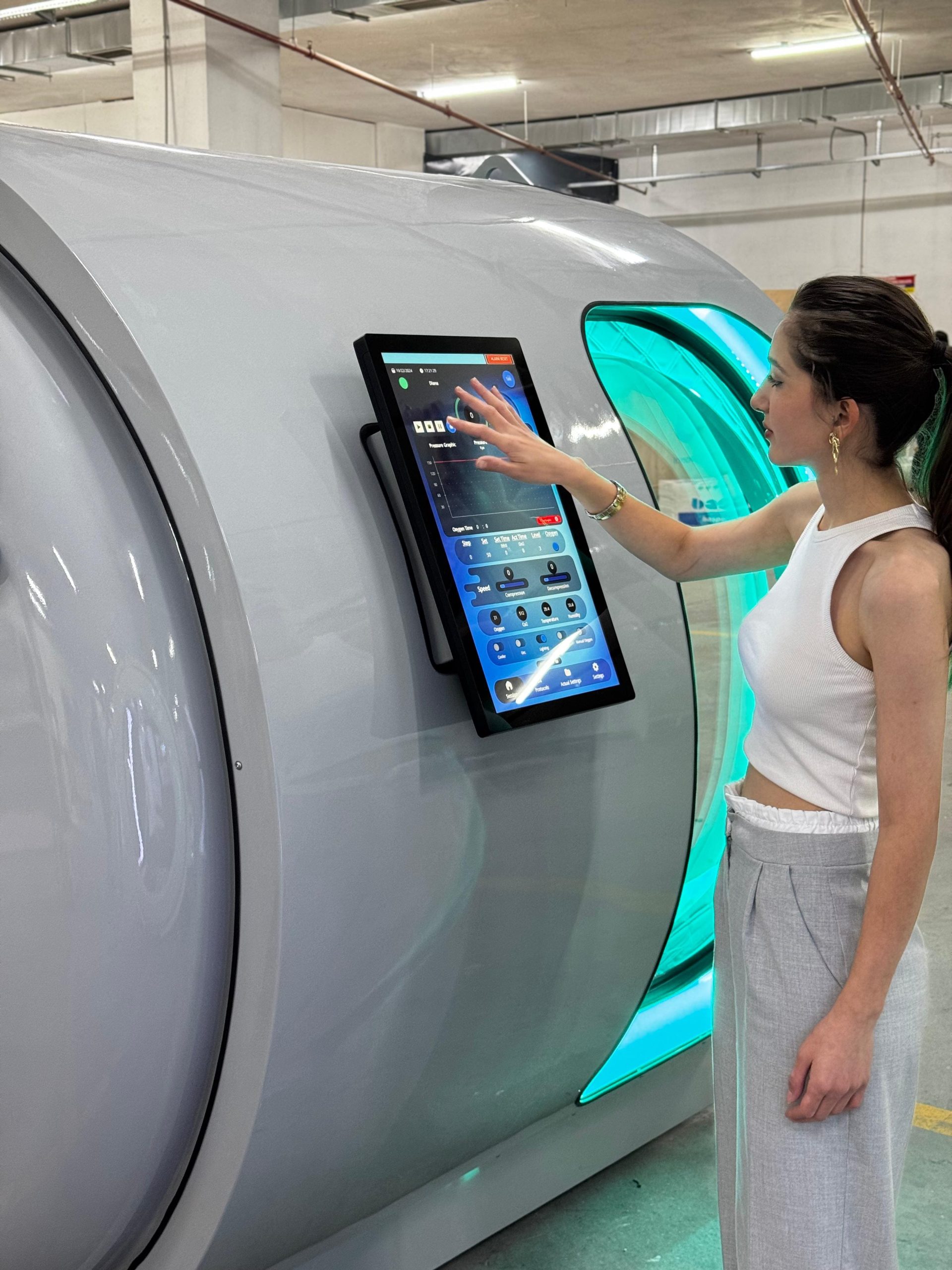
Compression does not happen instantaneously. Engineering protocols specify a ramp rate, expressed in ATA per minute or PSI per minute. A slow, controlled ramp protects occupants from rapid pressure differentials across air-filled body cavities such as the middle ear and sinuses. HPO TECH’s digital pressure-control system allows operators to program the full ramp profile, with safety interlocks that halt compression automatically if the target set-point is overshot.
Gas Supply Systems
Most hard-shell chambers use an industrial or medical-grade compressor supplying filtered, dried air. Inlet gas passes through moisture separators and particulate filters before entering the chamber plenum. Where oxygen is required inside the vessel, it is delivered separately through a mask or demand-regulator circuit, keeping bulk oxygen concentration within safe fire-suppression limits defined in the chamber’s design specification.
What Is Henry’s Law and Why Does It Matter for Chamber Design?
Henry’s Law, formulated by English chemist William Henry in 1803, states that the quantity of a gas dissolving into a liquid at constant temperature is directly proportional to the partial pressure of that gas above the liquid (Henry, Philosophical Transactions of the Royal Society, 1803). This is a principle of physical chemistry, not a biological claim. Engineers cite it because it governs how gases behave in any liquid present inside a pressurized environment, with direct consequences for seal material selection and system longevity.
Chamber designers must account for Henry’s Law in seal material selection. Many polymer seals absorb dissolved gas into their matrix when exposed to elevated pressure over extended cycles. During rapid decompression, that absorbed gas can form micro-bubbles within the seal, degrading elasticity and shortening service life. HPO TECH specifies fluoropolymer door and hatch seals rated at the chamber’s full MAWP to resist long-term gas absorption under cyclic pressure loading.
Citation Capsule: Henry’s Law and Seal Engineering
Henry’s Law (1803) states that gas dissolves into a liquid in proportion to the partial pressure above it. In hyperbaric chamber engineering, this governs seal material selection: polymer seals absorb dissolved gas under pressure and can degrade during decompression if under-specified for the working pressure. Engineers select fluoropolymer seals rated at or above the chamber’s MAWP to maintain long-term integrity across thousands of pressure cycles. (Henry, Philosophical Transactions of the Royal Society, 1803)
What Happens During Compression and Decompression?
During compression, gas feeds into the sealed shell at a controlled rate. As mass increases in a fixed volume, pressure rises per Boyle’s Law. Temperature also rises slightly due to adiabatic compression, a well-documented thermodynamic effect of gas compression. HPO TECH’s chamber volumes are sized to dissipate this temperature rise passively within the first few minutes of a session, without mechanical cooling.
During decompression, the exhaust valve opens at a controlled rate, allowing gas to escape. The engineering challenge is preventing too-rapid a pressure drop, which imposes structural stress at penetration points and creates uncomfortable pressure differentials across air-filled body cavities for occupants. Most engineering protocols specify a maximum decompression rate that mirrors the compression ramp profile for symmetry and occupant comfort.
What Are the Main Components of a Hyperbaric Chamber?
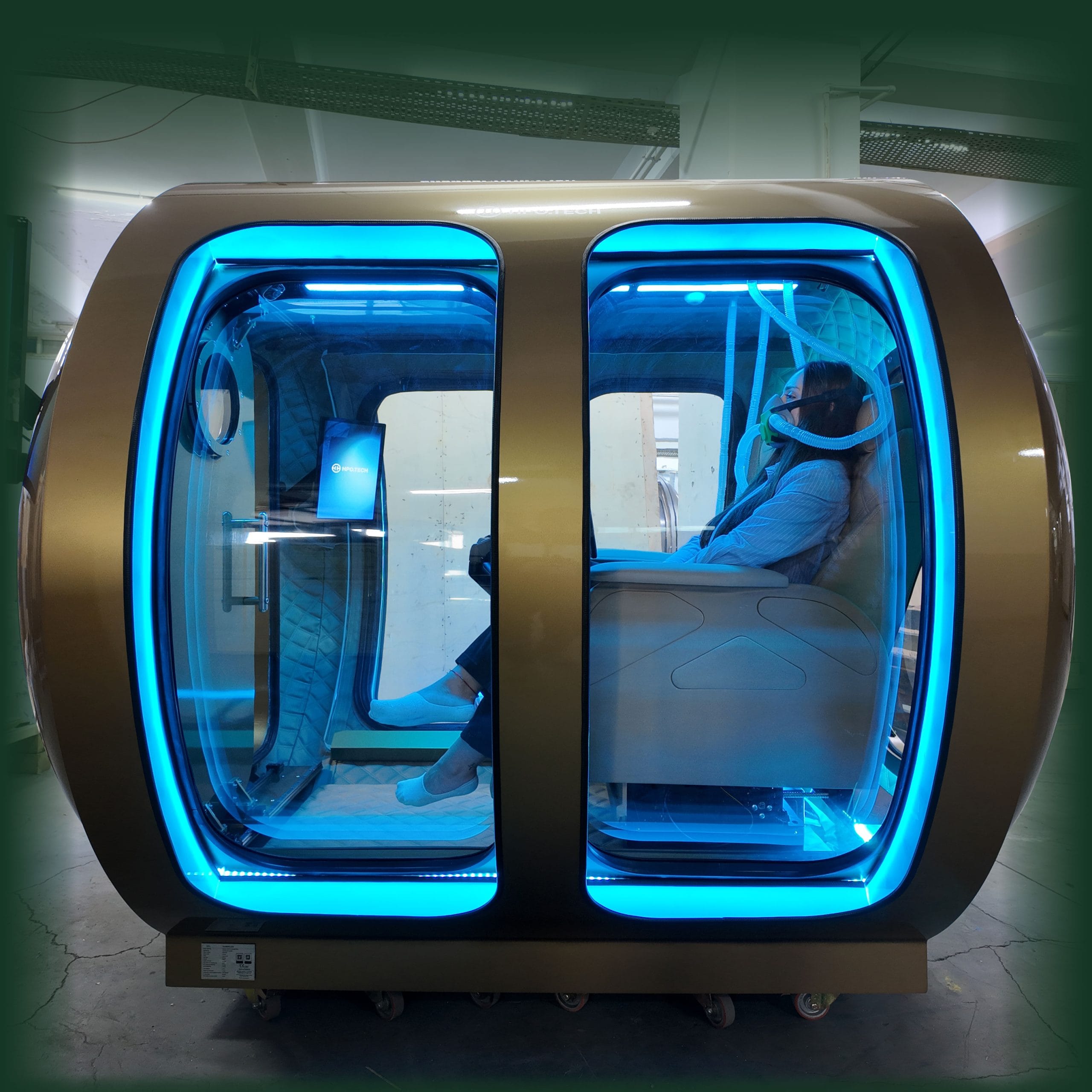
A modern hard-shell hyperbaric chamber is an assembly of seven principal sub-systems. Each carries independent ratings, installation requirements, and periodic inspection intervals defined by the applicable standard. The table below summarizes each component and its primary engineering parameter, based on the requirements of ASME PVHO-1 (ASME, 2019 edition).
| Component | Function | Key Engineering Parameter |
|---|---|---|
| Pressure shell | Contains the elevated atmosphere | MAWP rating; wall thickness per ASME PVHO-1 or regional equivalent |
| Hatch and door | Primary entry and exit seal | Pressure-actuated dogging mechanism; door seal rated to MAWP |
| Acrylic viewports | Occupant visibility and light entry | Thickness and diameter per ASME PVHO-1 Section 6; rated well above MAWP |
| Pressure-control system | Inlet and exhaust valve automation | Precise set-point control; electronic or pneumatic actuation |
| Gas delivery system | Delivers breathable gas at pressure | Flow rate, purity, and O₂ concentration monitoring |
| Safety relief valves | Prevent over-pressurization | Calibrated to open above MAWP; mechanically independent of control system |
| Communication and monitoring | Intercom, O₂ sensor, emergency controls | Intrinsically safe electronics where O₂ concentration exceeds 23.5% |
Citation Capsule: ASME PVHO-1 Viewport Standard
ASME PVHO-1 (Safety Standard for Pressure Vessels for Human Occupancy) governs the design, fabrication, and inspection of hyperbaric chamber acrylic viewports. The standard specifies minimum thickness relative to viewport diameter and working pressure, with burst ratings required to exceed the MAWP by a defined safety margin. Non-compliant viewports disqualify a vessel from use with human occupants in regulated markets. (ASME, PVHO-1, 2019 edition)
What Pressure Ratings Do Chambers Operate At?
Hyperbaric chambers are engineered across a wide range of pressure set-points, with each level carrying distinct structural, gas-delivery, and safety-system implications. Clinical-class monoplace and multiplace chambers typically operate between 2.0 and 3.0 ATA (ASME PVHO-1, 2019). Military, saturation diving, and research chambers extend to 6.0 ATA and beyond, requiring substantially heavier shell construction and more complex gas management systems.
| Pressure Level | Depth Equivalent (fresh water) | Physical Significance | Typical Application Context |
|---|---|---|---|
| 1.0 ATA | 0 m (surface) | Sea-level baseline pressure | Ambient reference; no compression |
| 1.3 ATA | ~3 m | Modest elevation; minimal adiabatic temperature rise | Soft-shell mild-pressure units |
| 2.0 ATA | ~10 m | Doubled atmospheric pressure; Henry’s Law gas absorption approximately doubles | Standard clinical monoplace set-point |
| 2.4 ATA | ~14 m | Intermediate set-point; increased structural loading on shell and viewports | Multiplace clinical and research contexts |
| 3.0 ATA | ~20 m | Triple atmospheric pressure; significant shell and viewport loading | Military, research, and dive decompression chambers |
| 6.0 ATA | ~50 m | Saturation and deep-dive pressure range | Commercial diving and naval chambers |
Note: ATA = Atmospheres Absolute. Depth equivalents assume fresh water (1 m fresh water ≈ 0.0968 ATA). Gauge pressure = ATA minus 1. Sources: BIPM, 2019; ASME PVHO-1, 2019.
How Are Safety Systems Engineered Into the Chamber?
Safety architecture in a hyperbaric chamber is redundant by design. No single-point failure should allow uncontrolled over-pressurization or prevent emergency depressurization. Three independent layers guard against pressure excursion in a correctly engineered system, consistent with ASME PVHO-1 requirements (ASME, 2019 edition).
The first layer is a software pressure ceiling within the control logic, with an audible and visual alarm threshold set below the MAWP. The second is an independent mechanical pressure relief valve calibrated to open above the MAWP without any electronic involvement. The third is a manual emergency vent valve accessible to the external operator at all times, independent of the automated control system.
Fire suppression is equally critical. Continuous oxygen concentration monitoring is standard; if a sensor reads above the design threshold for the chamber class, some system designs include a nitrogen purge circuit that activates automatically to dilute the atmosphere before ignition risk can build. All monitoring electronics in oxygen-enriched zones must be intrinsically safe, per the applicable electrical safety standard for the installation country.
What Standards Govern Hyperbaric Chamber Manufacturing?
Regulatory compliance frames every engineering decision in hyperbaric chamber manufacturing. Governing frameworks vary by region and chamber class but share common principles: pressure vessel structural integrity, electrical safety in oxygen-enriched atmospheres, and documented quality management from design through production and post-market surveillance.
- ASME PVHO-1 (USA): the primary standard for Pressure Vessels for Human Occupancy, covering shell design, viewport specifications, door and hatch seals, and periodic inspection intervals. (ASME, 2019 edition)
- ISO 13485:2016: international quality management standard for medical device manufacturers, covering design controls, production records, and post-market surveillance. (ISO, 2016)
- FDA 510(k): US market clearance pathway for Class II medical devices, including monoplace hyperbaric chambers, requiring demonstration of substantial equivalence to a predicate device. (FDA, current)
- EU MDR 2017/745 (CE marking): European conformity marking requiring notified body review for Class IIa and above devices. (European Commission, 2017)
- EN 14931: European harmonized standard for pressure vessels for human occupancy, structurally aligned with ASME PVHO-1 requirements.
HPO TECH designs to ASME PVHO-1 as the structural baseline, with ISO 13485:2016 quality management systems across manufacturing and documentation, and holds medical-device registrations across its markets — EU MDD/MDR, UKCA, Medsafe, Thai FDA, Ghana FDA, SFDA, UAE MOH (full register on the certifications page). Each unit ships with a full documentation package: design verification records, material mill certificates, and inspection reports.
Citation Capsule: Manufacturing Standards
ASME PVHO-1 and ISO 13485:2016 are the foundational standards for hyperbaric chamber manufacturing in regulated markets. PVHO-1 governs the structural and mechanical design of human-occupancy pressure vessels; ISO 13485 governs the quality management system under which they are designed and built. Together they form the compliance baseline for FDA 510(k) clearance in the USA and CE marking under EU MDR 2017/745 in Europe. (ASME, 2019; ISO, 2016; FDA; European Commission, 2017)
Frequently Asked Questions
What is the difference between ATA and PSI in chamber specifications?
ATA (atmospheres absolute) measures total pressure from zero, starting at 1 ATA at sea level (101.325 kPa / 14.696 PSI). Gauge PSI (PSIG) measures pressure above ambient, so sea level reads 0 PSIG. Chamber engineering uses ATA because it’s the standard unit in pressure vessel engineering and diving physics, making depth equivalents and compression ratios directly comparable across specifications. (BIPM, 2019)
Can a hyperbaric chamber operate without a trained operator present?
Most regulatory frameworks, including ASME PVHO-1 and FDA guidance for clinical-class chambers, require a trained operator at the control panel during any pressurized session. The operator monitors pressure readings, gas concentration, and occupant communication in real time. Unattended remote-only operation is not permitted for occupied chambers in regulated markets. (ASME PVHO-1, 2019; FDA, current)
How long does a typical compression ramp take?
Compression ramp duration depends on the target pressure and the programmed ramp rate. A typical ascent from 1.0 to 2.0 ATA at a moderate rate takes roughly 10 to 15 minutes. HPO TECH’s digital pressure-control system lets operators set custom ramp profiles within the limits defined in each chamber’s operations manual, with automatic safety holds if the profile deviates from the set parameters.
What materials are used in the shell of a hard-shell hyperbaric chamber?
Hard-shell chambers are typically fabricated from low-alloy carbon steel, stainless steel, or aerospace-grade aluminium alloy. Material selection depends on the MAWP, corrosion environment, and weight constraints. All structural materials carry mill certifications traceable to a specific heat and lot, as required by ASME PVHO-1 for pressure vessels used with human occupants. (ASME PVHO-1, 2019 edition)
How often does a hyperbaric chamber need inspection?
ASME PVHO-1 specifies periodic inspection intervals for pressure vessels for human occupancy, typically including annual visual inspections and multi-year non-destructive examination (NDE) cycles. The exact schedule depends on operational hours, MAWP class, and national regulations. HPO TECH supplies each chamber with a logbook and inspection schedule aligned to PVHO-1 requirements and ISO 13485 post-market documentation standards. (ASME PVHO-1, 2019)
Engineering Confidence, From Physics to Production
Understanding how a hyperbaric chamber works comes down to one foundational concept: a rigid, sealed pressure vessel that raises internal atmospheric pressure above ambient through controlled gas injection, holds it at a precise set-point, and releases it at a controlled rate. Every component from the shell and viewports to the pressure-control logic and safety relief valves exists to make that cycle repeatable, safe, and certifiable under demanding international standards.
The physics involved are well-established. Boyle’s Law governs the pressure-volume relationship inside a sealed vessel. Henry’s Law describes how gases dissolve into liquids in proportion to pressure, informing seal material choices and system design. Gay-Lussac’s Law accounts for the adiabatic temperature change during compression. What distinguishes a manufacturer like HPO TECH is the engineering judgment that translates these physics into a standards-compliant system built to run thousands of cycles across its service life.
To see how HPO TECH applies these principles in practice, explore our pressure engineering or browse the monoplace and multiplace ranges for specifications on the Zeugma, Atlantis, and other models.