
On this page
- What Is the Difference Between Hard-Shell and Inflatable Hyperbaric Chambers?
- Why Can't Inflatable Chambers Reach Clinical Pressures?
- What Does ASME PVHO-1 Require — and Which Chambers Must Comply?
- Hard-Shell vs. Inflatable: Side-by-Side Specs
- Which Portable Hyperbaric Chamber Configuration Lasts Longer?
- Which Setup Fits a Clinic vs. Personal Use?
- What Should You Ask Before Purchasing Portable Hyperbaric Chambers?
- Frequently Asked Questions
- The Bottom Line
The divide between hard-shell and inflatable hyperbaric chambers is a pressure physics problem, not a brand distinction. Hard-shell vessels, built from steel, aluminum, or acrylic and governed by ASME PVHO-1 (the Safety Standard for Pressure Vessels for Human Occupancy, first published in 1977), sustain working pressures from 2.0 to 3.0 ATA and above. Flexible fabric enclosures, constrained by the tensile characteristics of woven nylon and polyester, typically pressurize to 1.3 ATA, occasionally to 1.5 ATA in reinforced models. That gap defines everything downstream: applicable construction standard, operational envelope, certification pathway, and long-term cost of ownership. This guide breaks down the engineering distinctions so clinics, wellness operators, and institutional buyers can make an informed specification decision.
Key takeaways
- Hard-shell chambers built to ASME PVHO-1 routinely operate at 2.0–3.0 ATA; flexible fabric units cap at roughly 1.3–1.5 ATA due to material tensile limits.
- ASME PVHO-1 (first published 1977, revised 2019) governs hard-shell vessel construction. No equivalent mandatory standard applies to inflatable fabric enclosures.
- The hoop stress equation (σ = PD/2t) explains why woven fabric cannot sustain the gauge pressures a rigid steel or acrylic wall handles routinely.
- Hard-shell units typically achieve 20-plus-year service lives with scheduled inspection; inflatable units prioritize portability, with typical lifespans of 3–10 years.
What Is the Difference Between Hard-Shell and Inflatable Hyperbaric Chambers?
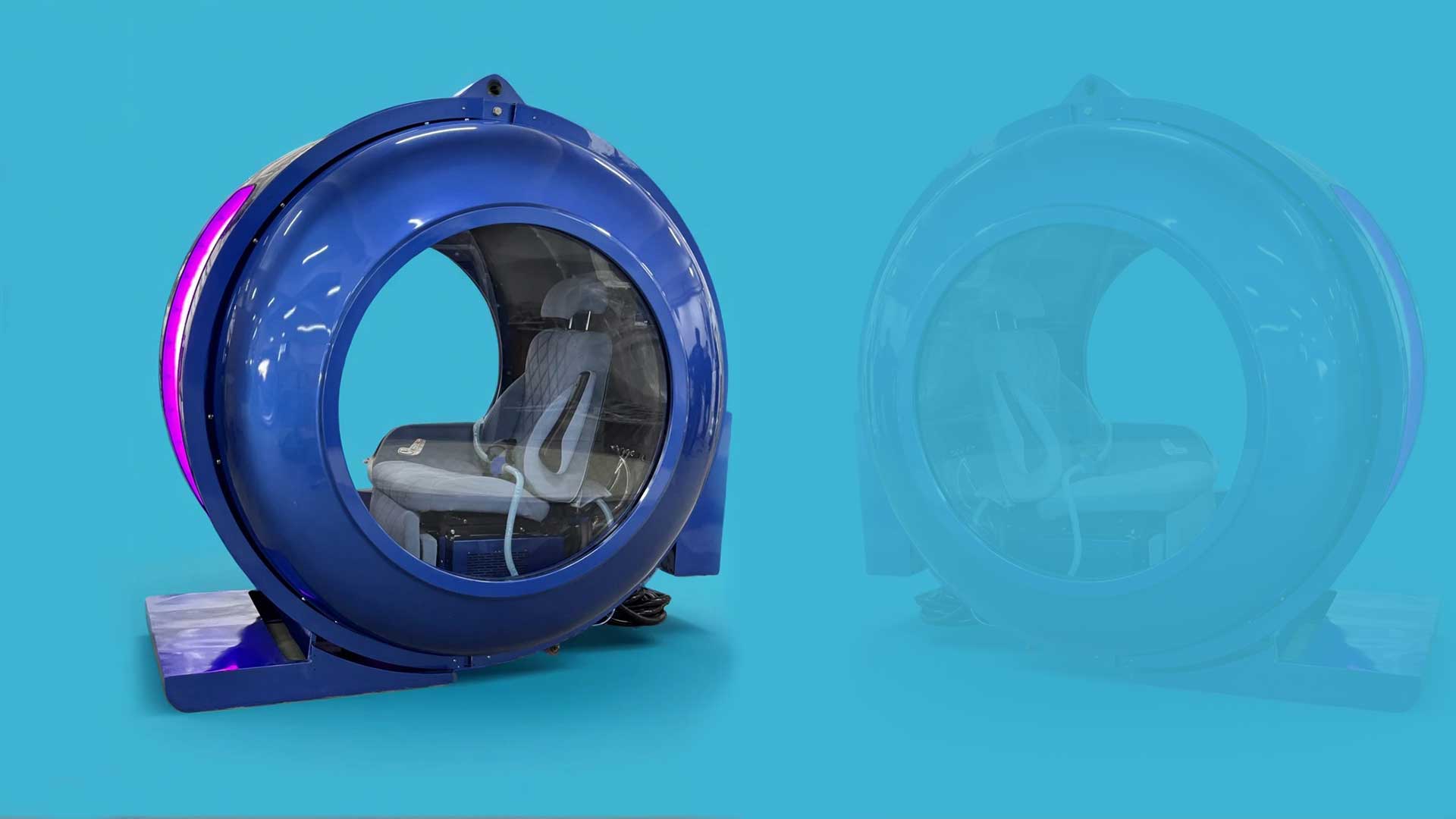
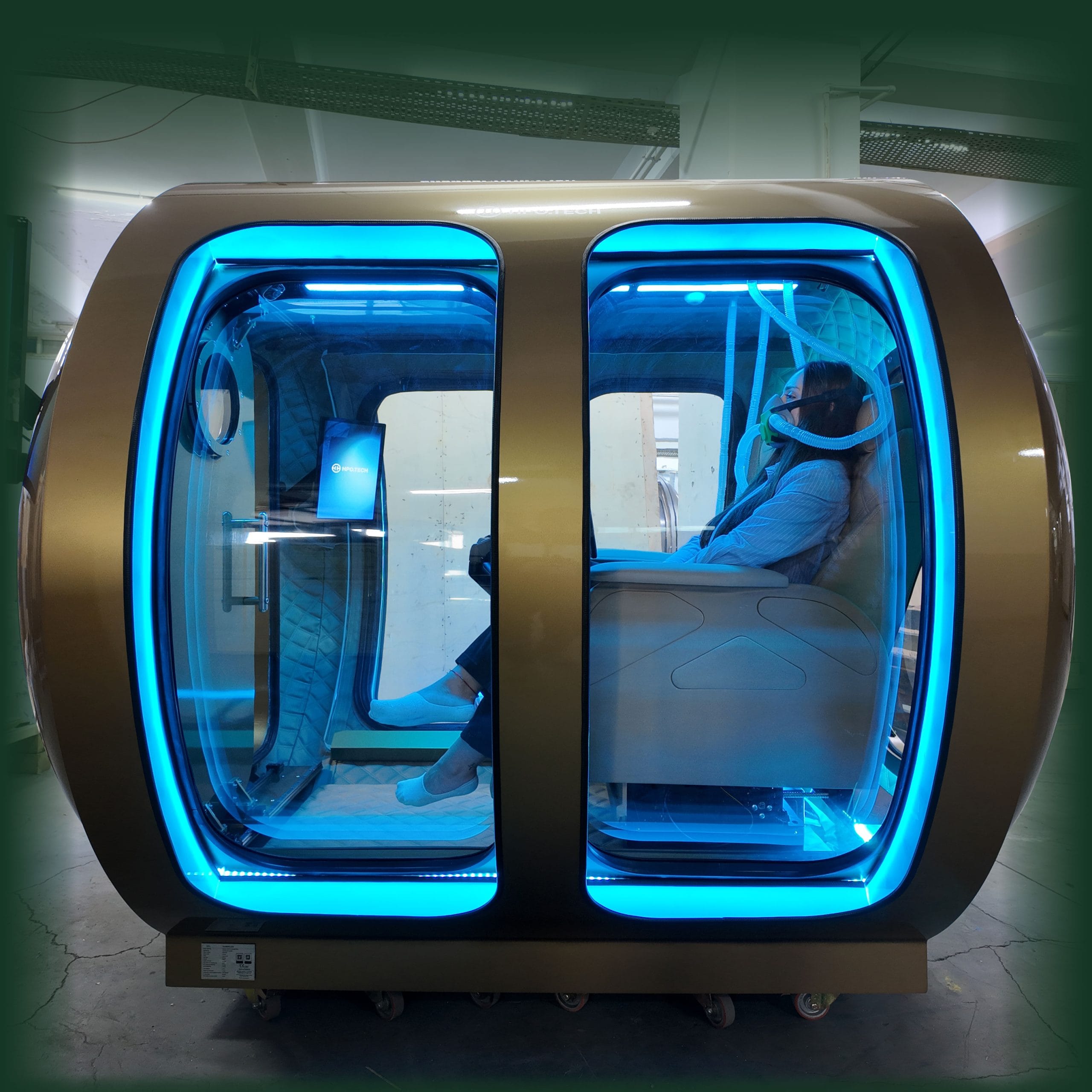
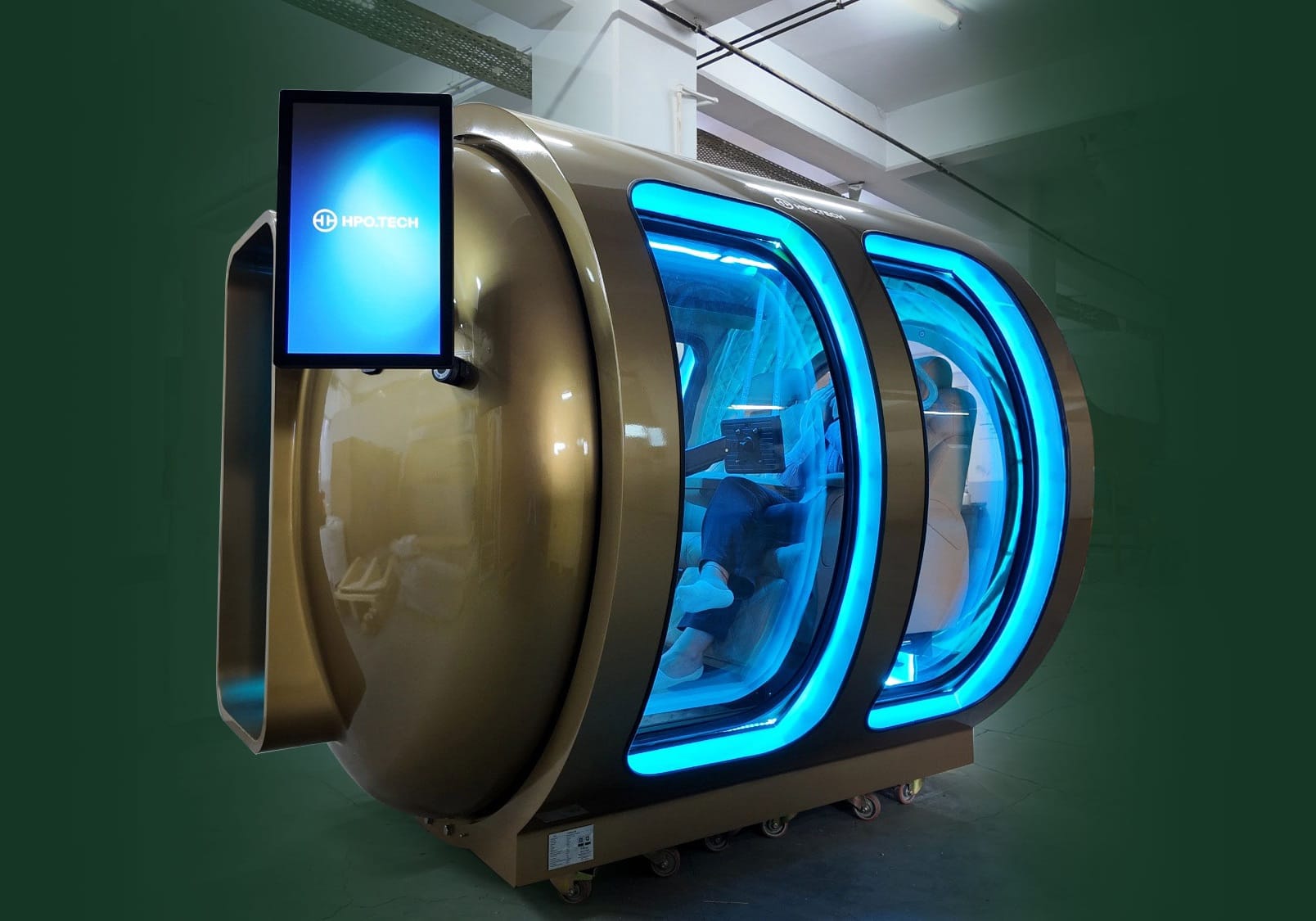
Hard-shell chambers use rigid pressure vessels, typically carbon or stainless steel, with transparent acrylic viewports conforming to ASTM D4802. Inflatable chambers use multi-layer woven fabric, most often nylon or polyester coated with thermoplastic polyurethane (TPU). ASME PVHO-1 (2019 edition), the only North American standard governing pressure vessels for human occupancy, applies exclusively to rigid-shell construction.
The material choice determines the operational ceiling from day one. A hard-shell vessel distributes internal pressure load across its full rigid wall thickness, transferring stress to welded flanges or bolted closures engineered to known yield points. A fabric enclosure relies on the tensile strength of its weave, which degrades under repeated pressurization cycles and UV exposure. These aren’t equivalent engineering approaches. They solve different problems, at different pressure levels, for different use cases.
Why Can’t Inflatable Chambers Reach Clinical Pressures?
The constraint is hoop stress: the circumferential tension a pressure vessel wall must resist continuously. Barlow’s formula defines it as σ = PD/2t, where σ is hoop stress, P is gauge pressure, D is vessel diameter, and t is wall thickness (Shigley’s Mechanical Engineering Design, 10th ed.). At 2.0 ATA gauge, the hoop stress demand across a body-diameter fabric enclosure exceeds the safe working load of commercial TPU-coated nylon by a significant margin.
How Fabric Tensile Limits Work in Practice
Commercial-grade woven nylon used in inflatable enclosures typically delivers tensile strengths in the 800–1,500 N/cm range, depending on weave density and thread count. At 1.3 ATA gauge pressure across a human-body-diameter cylinder, the hoop load approaches or reaches the practical safe working margins for that fabric grade. Hard-shell steel walls operate well within their yield strength at the same load.
Fabric also fatigues differently than steel. Each pressurization cycle flexes the fiber-to-fiber bonds and the TPU coating adhesion layer. Micro-tears develop over hundreds of cycles, invisible to the naked eye but cumulatively compromising the pressure boundary. ASME PVHO-1 Section 6.3 requires hard-shell vessels to undergo hydrostatic proof testing at a minimum of 1.5 times the maximum allowable working pressure. No equivalent mandatory fatigue or hydrostatic requirement governs inflatable fabric chambers.
The zipper closure deserves specific attention. It bears the full outward pressure force across a flexible linear seam, without the mechanical advantage of a bolted flange. Zipper fatigue and delamination at the zipper-to-fabric bond are the dominant structural concerns in inflatable units, not raw fabric rupture. Hard-shell chambers use bolted flange closures or hinge-mount doors with full-face gaskets and positive mechanical locks, all inspected under PVHO-1 criteria.
What Does ASME PVHO-1 Require — and Which Chambers Must Comply?
ASME PVHO-1 specifies design, material selection, fabrication, testing, and inspection requirements for any rigid vessel enclosing a person at above-atmospheric pressure. The 2019 edition requires hydrostatic proof testing at a minimum of 1.5 times the maximum allowable working pressure, per Section 6.3 (ASME PVHO-1, 2022). Inflatable fabric enclosures fall outside the standard’s scope by definition: they’re not pressure vessels in the ASME structural sense.
Key PVHO-1 Requirements at a Glance
- Materials: Pressure-retaining shell components must meet ASME Section II material specifications for carbon steel or aluminum alloy.
- Viewports: Acrylic windows must conform to ASTM D4802 Grade B1 or better, with specified thickness-to-diameter ratios per PVHO-1 Appendix A.
- Welds: Full-penetration welds, examined by radiography or ultrasonic testing per ASME Section VIII Division 1.
- Proof testing: Hydrostatic test at 1.5x MAWP before commissioning, per Section 6.3.
- Relief devices: Pressure relief valves sized and installed per Section 5.
- Periodic inspection: Annual visual examination and non-destructive testing on a defined schedule.
International Equivalents
EN 14931 is the European counterpart, covering pressure vessels for human occupancy for CE-marked products sold in the EU. ISO 13485:2016, adopted internationally as the quality management standard for medical device manufacturers, governs design control, documentation, and post-market surveillance systems. A fully documented hard-shell chamber typically carries both: PVHO-1 or EN 14931 compliance on the vessel itself, and ISO 13485 certification for the manufacturing quality system. On the medical-regulatory side, manufacturers registered under frameworks such as EU MDD/MDR (CE marking), UKCA, Medsafe, SFDA, UAE MOH and national FDA registrations (Thailand, Ghana) — as HPO TECH is — can supply the per-market approval documentation clinical buyers need; the full register is on the certifications page.
Hard-Shell vs. Inflatable: Side-by-Side Specs
| Specification | Hard-Shell Chamber | Inflatable (Soft-Shell) Chamber |
|---|---|---|
| Maximum operating pressure | 2.0–3.0 ATA (some configurations higher) | ~1.3 ATA; select reinforced models to ~1.5 ATA |
| Primary shell material | Carbon steel, stainless steel, or aluminum alloy | Multi-layer woven nylon or polyester with TPU coating |
| Applicable construction standard | ASME PVHO-1 (US); EN 14931 (EU) | No equivalent mandatory standard |
| Viewport standard | ASTM D4802 Grade B1 or better | Not applicable |
| Hydrostatic proof testing | Required at 1.5x MAWP (ASME PVHO-1 Section 6.3) | Not specified by mandatory standard |
| Typical service life | 20–30 years with scheduled inspection | 3–10 years depending on use cycles |
| Portability | Semi-portable (monoplace); fixed installation (multiplace) | Fully portable; deflates for transport and storage |
| Closure mechanism | Bolted flange or hinged door with full-face gasket | Industrial zipper or sleeve closure |
| QMS certification | ISO 13485 (medical device manufacturers) | Varies by manufacturer |
| Typical primary application | Clinical facilities, research, wellness centers | Personal use, home, travel |
Which Portable Hyperbaric Chamber Configuration Lasts Longer?
Hard-shell pressure vessels built to ASME PVHO-1 carry design service lives typically in the 20-to-30-year range, comparable to other ASME-coded industrial vessels, provided annual inspection and periodic hydrostatic retesting are performed. Inflatable chambers carry manufacturer-stated lifespans of 3 to 10 years, because repeated flex cycles degrade both the TPU coating adhesion and the base fabric tensile strength over time.
The degradation mechanism differs significantly between the two types. In a steel chamber, the primary aging concern is corrosion at weld seams and penetrations, managed through visual examination and dye-penetrant or magnetic particle inspection on a defined schedule. In a fabric chamber, the failure mode is delamination of the TPU coating from the base weave, beginning as gas permeation and progressing to visible bubbling, particularly at valve patch interfaces and zipper flanges.
Lifecycle cost follows a predictable pattern. A hard-shell chamber’s higher upfront cost is offset by its 20-to-30-year service life and predictable maintenance schedule. An inflatable unit’s lower entry cost is offset by shorter replacement cycles and the absence of a structured third-party inspection program. Buyers should model purchase-plus-maintenance over a 10-year horizon before comparing sticker prices.
Which Setup Fits a Clinic vs. Personal Use?
The right choice depends on the pressure requirement and the operational context. Clinical facilities operating documented hyperbaric oxygen protocols under Undersea and Hyperbaric Medical Society (UHMS) guidelines require working pressures of 2.0 ATA and above. That pressure range is accessible only in hard-shell vessels built to ASME PVHO-1. Inflatable units, capped at 1.3–1.5 ATA, operate below that clinical envelope.
Clinic and Institutional Buyers
Clinical operators in the US must comply with NFPA 99 Chapter 14 (Health Care Facilities Code, Hyperbaric Facilities). This requires chambers that carry FDA 510(k) clearance, meet facility-level fire suppression and electrical requirements, and integrate with oxygen supply and emergency depressurization systems. All of this assumes a fixed, rigid pressure boundary. Hard-shell monoplace and multiplace chambers meet these requirements by design. Inflatable chambers don’t fall within NFPA 99 Chapter 14’s framework.
Personal and Wellness Use
Buyers seeking portable hyperbaric chambers for personal or home wellness use typically prioritize low entry cost, compact storage footprint, and setup simplicity over maximum pressure. Inflatable units deliver on these factors: they pack into carry bags, require no fixed plumbing, and can be operational in under 15 minutes. The engineering tradeoff is clear. The 1.3–1.5 ATA operating range is what the buyer is getting, and it should factor explicitly into the purchasing decision.
What Should You Ask Before Purchasing Portable Hyperbaric Chambers?
Due diligence starts with the pressure specification and the certification trail. ISO 13485:2016, the quality management standard adopted internationally for medical device manufacturers, requires full traceability from raw material to finished vessel, including test records and non-conformance logs. A manufacturer who can’t produce these documents on request is worth scrutinizing, regardless of chamber type.
Seven questions to ask any hard-shell chamber manufacturer:
- What is the documented maximum allowable working pressure (MAWP), and on which drawing or certificate is it established?
- Does the vessel carry ASME PVHO-1 certification (US) or CE marking under EN 14931 (EU)?
- What is the FDA device classification and 510(k) clearance number for this specific model?
- What material specifications govern the pressure shell, and is mill certification traceability available?
- What is the inspection schedule, and who performs the annual inspection in our region?
- What is the manufacturer’s stated service life, and what does end-of-life structural assessment look like?
- What warranty covers the pressure-retaining components versus consumable items such as seals and valves?
For inflatable units, add one more: What is the hydrostatic burst test result, at what multiple of rated pressure was it tested, and which third-party body witnessed or certified the test?
Frequently Asked Questions
What pressure does an inflatable hyperbaric chamber reach?
Most commercially available inflatable hyperbaric chambers operate at a maximum of 1.3 ATA, approximately 4.4 psi gauge above atmospheric pressure. Some reinforced models specify up to 1.5 ATA. These limits reflect the tensile capacity of the woven fabric shell and the structural limits of zipper closures. Exceeding the manufacturer’s rated pressure risks zipper failure or seam separation.
Do inflatable chambers comply with ASME PVHO-1?
No. ASME PVHO-1, the Safety Standard for Pressure Vessels for Human Occupancy, applies to rigid vessels. Flexible fabric enclosures fall outside the standard’s defined scope by design. Buyers should request the specific certification documentation applicable to any inflatable unit and verify which third-party body, if any, audited the product’s safety testing.
Can a hard-shell hyperbaric chamber be portable?
Yes, within limits. Monoplace hard-shell chambers are significantly larger than inflatable units, but many clinical-grade monoplace designs allow transport between facilities using standard pallet-lift equipment. They don’t pack into a carry bag. Multiplace chambers are fixed installations. If portability is the primary requirement, a hard-shell monoplace requires facility-level planning at each site.
How long does a hard-shell hyperbaric chamber last?
Hard-shell steel chambers built to ASME PVHO-1 have typical design service lives of 20 to 30 years, provided the manufacturer’s maintenance schedule is followed: annual visual inspection, periodic hydrostatic retesting, and replacement of consumable seals and valves on schedule. In low-cycle applications, actual service life often exceeds the design figure.
What is the difference between ASME PVHO-1 and ISO 13485 for hyperbaric chambers?
ASME PVHO-1 governs the physical vessel: materials, welds, viewports, proof testing, and inspection schedule. ISO 13485:2016 governs the manufacturer’s quality system: design controls, traceability, documentation, and post-market surveillance. A fully specified hard-shell chamber should carry both: PVHO-1 compliance on the vessel itself, and ISO 13485 certification for the manufacturing organization that built it.
The Bottom Line
The engineering case is clear. If your operating context requires 2.0 ATA or above, or if you need a chamber built to a documented, third-party-audited construction standard, only a hard-shell vessel meets those requirements. Inflatable portable hyperbaric chambers serve a genuinely different use case, where portability and setup simplicity outweigh the pressure ceiling constraint.
Before specifying either type, confirm the pressure requirement for your intended protocols, identify the applicable certification pathway in your market, and model total cost of ownership over a 10-year horizon. The upfront price gap between hard-shell and inflatable narrows considerably once inspection, maintenance, and replacement cycles enter the calculation.
HPO TECH manufactures hard-shell hyperbaric chambers to ASME PVHO-1, ISO 13485, and CE standards, with a product line developed from diving and military pressure vessel heritage. Browse the hard-shell monoplace range, or request a quote with your pressure and capacity specifications.